
Indian benchmark indices, Sensex and Nifty, saw a significant rebound in early trade, with the Sensex jumping 726 points and the Nifty climbing over 200 points, primarily driven by strong performances in IT stocks, HDFC Bank, and renewed foreign fund inflows. Track Sensex, Nifty on July 29.

The government is introducing a 0.4% Merchant Discount Rate (MDR) on UPI person-to-merchant payments above Rs 2,000, effective October 15. This move ends the zero-MDR regime, aiming to fund UPI infrastructure and sustainability, as the previous government subsidy was insufficient to cover operational costs. Payments between individuals and most everyday merchant transactions will remain free.

The challenge for India lies in navigating complex landscape to its best advantage. The BRICS Summit will test its navigation skills, asserts former foreign secretary Shyam Saran.

'Banking is the only sector that can see double-digit growth in FY27.'

Economists widely anticipate the Reserve Bank of India's Monetary Policy Committee will increase the repo rate by 50 basis points, likely split between the October and December meetings, as retail inflation is projected to peak at 6.1 per cent in the third quarter, exceeding the RBI's tolerance limit.

Industry experts advocate for India to develop its own artificial intelligence (AI) safety framework, distinct from US or EU models, to address unique challenges like deepfakes and cyberattacks. They call for a comprehensive commitment involving all stakeholders and a hybrid regulatory approach combining voluntary and binding measures, as the Indian government also considers new AI regulations.

The National Stock Exchange marked its stock market debut at the Bombay Stock Exchange on September 24, 2026, with a traditional gong-ringing ceremony.

If the new MDR regime is rolled out from the middle of this month, as scheduled, it should count as one of the boldest political actions by the Modi government on an economic-policy issue, and a signal that it is less worried about erosion of political capital it draws from one of its key constituencies, notes A K Bhattacharya.

Indian benchmark indices, Sensex and Nifty, extended their losses for a second consecutive day, primarily due to HDFC Bank's disappointing quarterly earnings and escalating tensions in West Asia, coupled with persistent foreign fund outflows.

The Central Bureau of Investigation (CBI) has arrested Ankit Satishchandra Pandey in connection with a transnational cyber-financial fraud case. Pandey allegedly defrauded US nationals of over USD 7 million by impersonating US federal agency officials through illegal call centres in Gujarat, coercing victims into transferring funds and purchasing gold.

Non-resident Indian (NRI) deposit schemes witnessed a staggering 678.2 per cent increase, reaching $36.24 billion in the April-July period of FY27, primarily driven by strong FCNR(B) deposit flows and a concessional swap facility introduced by the RBI.

Indian benchmark indices, Sensex and Nifty, experienced a significant downturn, with Sensex tanking 778 points and Nifty closing at a five-month low, driven by surging crude oil prices, geopolitical tensions, and fears of further interest rate hikes by major central banks.
State-run Punjab National Bank (PNB) is strategically planning to enter the wealth management segment by early 2027 and significantly expand its credit card portfolio, aiming to tap into lucrative markets largely dominated by private-sector banks.

The Indian government has introduced a 0.4 per cent Merchant Discount Rate (MDR) on UPI payments exceeding Rs 2,000 made to merchants, effective from October 15, with a comprehensive framework set to take full effect by October 15, 2026. This policy aims to regulate transaction fees while protecting small merchants and person-to-person transactions.

Bajaj Finserv, a leading Indian non-banking financial services company, has announced its support for 16-year-old Olympic swimmer Dhinidhi Desinghu. The company plans to invest in swimming, tennis, badminton, and running to foster emerging sports talent in India, aiming to elevate the sports landscape and careers of many athletes.

Indian benchmark indices, Sensex and Nifty, ended marginally lower after recovering from sharp intraday losses, driven by cooling crude oil prices and buying interest in HDFC Bank and IT sector stocks.

HDFC Bank's board has imposed a monetary penalty of Rs 1 lakh each on its Managing Director and CEO Sashidhar Jagdishan, CFO Srinivasan Vaidyanathan, and Group Head (Retail Assets) Arvind Vohra for divergence from RBI directions in the Maharashtra State Road Development Corporation (MSRDC) case.

RBI Deputy Governor S C Murmu stated that the introduction of merchant discount rate (MDR) on UPI transactions is unlikely to cause a shift back to cash, despite some concerns, emphasising that MDR will help the payments ecosystem recover costs.

OnePlus has expanded the 13s range with a new 16 GB RAM and 512 GB storage configuration.

The Enforcement Directorate has arrested Kirshanu Sharda, an alleged middleman for suspended Punjab Police DIG Harcharan Singh Bhullar, in a money laundering case. Sharda is accused of facilitating illegal gratification for Bhullar, with investigations revealing unexplained cash deposits and frozen assets worth over Rs 1.42 crore.

The Enforcement Directorate has arrested Deepesh Bajoria, a principal bookie from Guwahati, in connection with a large-scale money-laundering investigation linked to an illegal T20 cricket-betting syndicate operating during IPL seasons across the Northeast. Bajoria allegedly used online platforms and encrypted channels to facilitate betting, routing over Rs 28 crore through a non-operational firm's bank account.

India's proposal to link BRICS payment systems, including central-bank digital currencies (CBDCs), was notably absent from the grouping's New Delhi Declaration, despite being a key agenda item for India's chairmanship. This omission leaves the 16-year effort for trade in local currencies without a settled payment architecture, with the declaration only 'acknowledging' the work of the BRICS Payment Task Force.

A letter sent by the Sir Dorabji Tata Trust to Venu Srinivasan, Tata Trusts vice-chairman and nominee director on Tata Sons, a day before the Tata Sons board meeting on September 17, is at the centre of deliberations.

India's banking system liquidity has fallen to its lowest level in over three weeks, driven by robust credit growth and potential RBI intervention in the foreign exchange market, according to the latest data from the Reserve Bank of India.

Congress leader Rahul Gandhi has accused the Modi government of quietly paving the way for imposing fees on UPI transactions, alleging it's a surrender to American pressure. The government's recent notification exempts charges only up to Rs 2,000, sparking concerns that higher value transactions and eventually all UPI payments could incur fees. Finance Minister Nirmala Sitharaman, however, clarified that Merchant Discount Rate (MDR) applies to merchants, not customers, and supports digital infrastructure.

A high-level committee, including representatives from banks and payment associations, is set to decide on Merchant Discount Rate (MDR) for UPI transactions exceeding Rs 2,000 to merchants. While person-to-person and person-to-merchant transactions up to Rs 2,000 remain free, the move follows a recent amendment to the Payment and Settlement Systems Act, sparking debate and clarification from the Finance Minister that only certain high-value merchant transactions might incur charges.

Indian benchmark indices, Sensex and Nifty, closed higher on Thursday, breaking a three-day losing streak, driven by late buying in financial heavyweights like HDFC Bank and Axis Bank, despite persistent geopolitical tensions and crude oil prices exceeding USD 100 per barrel.

The Indian government has introduced a 0.4 per cent charge on UPI payments exceeding Rs 2,000 made to merchants, with a cap of Rs 300 for transactions of Rs 75,000 and above. This policy shift ends the zero-MDR regime, which was previously criticised by financial institutions. While essential sectors and capital markets have specific fee structures, small merchants with monthly UPI QR code earnings up to Rs 1 lakh remain exempt. Person-to-person transfers are unaffected, and measures are in place to prevent merchants from passing these costs to customers.

The Congress party has criticised the government's recent notification regarding UPI transactions, alleging it paves the way for users to be charged fees, particularly for transactions above Rs 2,000. The party claims the government lacks transparency and questions if the move is to benefit American firms. The government, however, states that charges are necessary for the system's sustainability and infrastructure upgrades, with the Finance Minister clarifying that Merchant Discount Rate (MDR) applies to merchants, not customers.

The Reserve Bank of India (RBI) has rejected Tata Sons' application to surrender its non-banking finance company (NBFC) licence, a decision that mandates a public markets listing for the conglomerate's holding company as it is classified as an upper-layer NBFC.
The Reserve Bank of India (RBI) has endorsed the introduction of a Merchant Discount Rate (MDR) on UPI transactions exceeding Rs 2,000, effective October 15. This move, which levies a 0.4 per cent fee on merchant payments above the threshold, aims to bolster the long-term sustainability and growth of India's digital payments ecosystem. The RBI clarified that person-to-person (P2P) transactions and small person-to-merchant (P2M) payments below Rs 2,000 will remain free for users, ensuring no direct charge on customers.

The Insurance Regulatory and Development Authority of India (Irdai) has proposed a phased reduction in the expenses of management (EoM) limits for insurers, aiming to lower the overall cost of insurance and enhance returns for policyholders. The proposals also include a new framework for commissions, stricter measures against mis-selling, and mandatory cost audits.

Gujarat CID-Crime has registered FIRs against three political outfits Swatantrata Abhivyakti Party, Satyavadi Rakshak Party, and Garib Kalyan Party for allegedly orchestrating a 'poll donation scam' amounting to Rs 314 crore in tax evasion. These parties reportedly collected donations, returned money after deducting commissions, and facilitated tax rebates for donors, with chartered accountants also implicated. The scam involved submitting false contribution reports to the Election Commission.

Life Insurance Corporation of India (LIC) is facing a thinning of its top management as Managing Director Dinesh Pant exits to join Irdai, leaving one of four MD posts vacant. This comes amidst broader staffing challenges across several public sector insurers and a headless Financial Services Institutions Bureau (FSIB).

The Indian government has mandated that banks and payment providers cannot levy charges on UPI transactions up to Rs 2,000 or on payments made via RuPay debit cards. This directive follows an amendment to the Payment and Settlement Systems Act, 2007, aiming to sustain and expand the digital payments ecosystem.

ICICI Bank has successfully raised $1 billion through a five-year senior unsecured US dollar bond, marking its first public dollar bond issuance since 2017 and the largest single-tranche US dollar bond issuance by an Indian issuer so far this year.
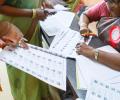
Former RBI Governor Bimal Jalan, ex-IAF Chief NAK Browne, and other prominent figures in Delhi have received notices regarding discrepancies in their voter details during the ongoing Special Summary Revision (SIR) of the electoral rolls. Over 33 lakh electors have been identified for such notices, with a deadline of September 30 for responses.

'Your retirement corpus isn't just a big pile of cash for 'one day' -- it is the salary you pay yourself when you no longer want to go to work.'

India's foreign exchange reserves have surged by a record USD 44.903 billion to a new lifetime high of USD 785.706 billion for the week ended September 4, driven by the Reserve Bank of India's concessional forex swap initiatives.

Indian stock market benchmark indices Sensex and Nifty recorded their second consecutive day of decline, with the Sensex dropping 555.23 points and the Nifty falling 144.05 points, primarily due to rising crude oil prices and ongoing US-Iran hostilities in West Asia.
